When autumn arrives in Massachusetts, falling leaves can quickly cover lawns, garden beds, driveways, and walkways. Keeping up with the changing foliage can feel like a never-ending chore, especially when more leaves fall just days after you’ve finished cleaning up. The good news is that you do not have to remove every leaf by hand or spend every weekend raking. Choosing the right approach to fall leaf removal can help you protect your lawn, save time, and keep your property looking its best throughout the season.
At JM McLaughlin Landscaping, we know that every property has different needs. Mulch-mowing works well in some situations, while raking or professional leaf removal makes more sense in others. Understanding the differences can help you decide which method is right for your yard.
In this guide, you will learn:
- How to choose the right leaf removal method
- Whether you should mulch leaves or rake them
- When fallen leaves become a problem
- How to manage fall leaf removal in Massachusetts
- When professional leaf removal is worth considering
Why Is Fall Leaf Removal Important for Your Massachusetts Lawn?
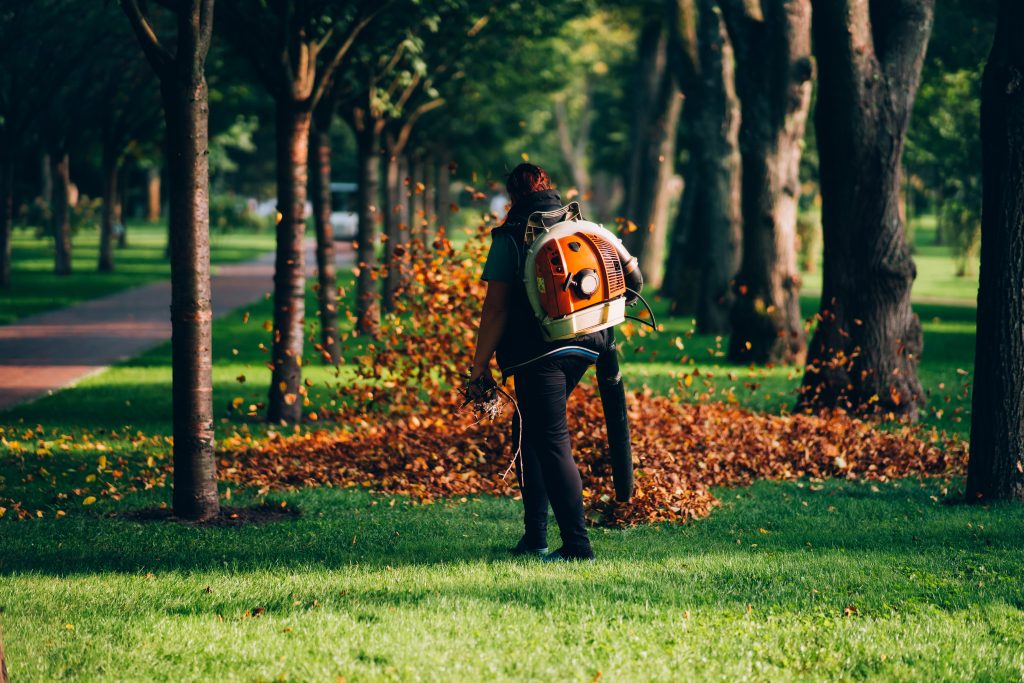
Fall leaf removal helps protect your lawn when fallen foliage begins to accumulate in thick layers. Although a light scattering of leaves is not necessarily harmful, a dense covering can block sunlight, restrict airflow, and create conditions that make it harder for grass to remain healthy.
As leaves fall throughout autumn, they can collect in low spots, along fences, beneath trees, and around garden beds. Rain and damp weather can cause these leaves to stick together and form heavy mats. When that happens, sunlight has a harder time reaching the grass, and moisture can become trapped beneath the debris.
Leaving excessive leaves on paved surfaces can also create problems. Wet foliage may make walkways and driveways slippery, while piles can accumulate around entrances and other frequently used areas.
The goal is not necessarily to remove every leaf from your property. Instead, we recommend paying attention to how much coverage your lawn receives and removing excess foliage before it becomes difficult to manage.
Should You Mulch Leaves or Rake Them?
Mulch-mowing is often the better choice when leaves are dry, relatively sparse, and spread in a thin layer across the lawn. Raking and collecting leaves is more appropriate when the coverage becomes too thick for a mower to chop and distribute evenly.
Both methods can work well, and you do not have to choose only one for your entire property.
When Is Mulch-Mowing Leaves the Better Choice?
Mulch-mowing works best when your lawn has a manageable amount of dry leaves and the grass remains visible beneath them. A mulching mower cuts the foliage into smaller pieces, allowing the material to settle between the grass blades and gradually break down.
This approach can save time because you do not have to gather, bag, and transport every leaf. As the shredded material decomposes, it can return organic matter and nutrients to the soil.
However, successful mulch mowing leaves depends on the amount and condition of the foliage. A mower may struggle with thick piles or wet leaves that clump together. Excessive material can also smother sections of grass instead of breaking down evenly.
For the best results, mow when conditions are reasonably dry and make additional passes if necessary. If the grass becomes buried beneath the chopped leaves, switch to collection rather than continuing to mulch.
When Should You Rake and Remove Leaves Instead?
Raking and collecting leaves is usually the better option when your lawn has heavy coverage, particularly when foliage has become wet, compacted, or matted.
This method allows you to remove excess material instead of spreading it across the turf. It is also useful for gathering leaves around planting beds, fences, walkways, and other areas where a mower may not be practical.
Raking offers precise control, but it can require considerable physical effort when you have a large yard or numerous trees. Leaf blowers can help move foliage into manageable piles, although the leaves still need to be collected and disposed of appropriately.
For many Massachusetts properties, a combination of both approaches works best. We can mulch areas with light coverage and remove leaves from sections where they have accumulated too heavily.
What Is the Difference Between Raking, Mulch-Mowing, and Professional Leaf Removal?
The best method depends on your property’s size, the volume of fallen leaves, and how much time you can dedicate to cleanup. Each option offers different benefits, so it helps to compare them before deciding how to maintain your yard.
| Method | Best For | Main Advantages | Limitations |
|---|---|---|---|
| Raking | Small lawns, garden edges, and concentrated leaf piles | Provides precise control and does not require powered equipment. | Can be physically demanding and time-consuming on larger properties. |
| Mulch-mowing | Lawns with a manageable layer of dry leaves | Shreds foliage into smaller pieces that can break down on the lawn. | Works poorly with excessive or wet leaf coverage and may require multiple passes. |
| Leaf blowing and collection | Larger lawns, driveways, walkways, and areas where leaves need to be gathered | Helps move foliage into piles for easier collection. | Does not remove leaves by itself, and wind may scatter them again. |
| Professional leaf removal | Properties with heavy leaf fall, extensive landscaping, or limited homeowner availability | Reduces the time and physical effort needed for a thorough cleanup. | Requires a service budget and scheduling around provider availability. |
You can also combine these methods to get the best results. For example, you might mulch a lightly covered lawn, rake leaves away from delicate plants, and use a leaf blower to gather foliage along the driveway.
The important thing is to match the method to the area being cleaned. What works well on an open lawn may not be suitable for a garden bed or a narrow walkway.
When Should You Start Fall Leaf Removal in Massachusetts?
You should begin managing fallen leaves as they accumulate rather than waiting until every tree has finished dropping its foliage. Regular attention throughout autumn can make cleanup more manageable and prevent heavy layers from building up on your lawn.
In Massachusetts, leaf drop varies by location, tree species, and weather conditions. Some properties may need attention earlier in the season, while others experience their heaviest accumulation later in autumn.
Instead of relying on a single cleanup date, inspect your yard regularly as the foliage changes. If leaves begin covering large sections of grass, collect or mulch them before the buildup becomes excessive.
Weather also affects the timing. Dry leaves are generally easier to handle than wet ones, which become heavier and more difficult to move. When possible, plan your cleanup around suitable weather conditions rather than waiting until rain has compacted the foliage.
A final cleanup before winter is useful for removing remaining heavy accumulations from lawns and frequently used outdoor areas. However, you may need several visits to keep up with ongoing leaf drop, especially if mature trees surround your property.
How Can You Remove Leaves From Your Yard More Efficiently?
You can make leaf removal easier by working in manageable sections, choosing the right equipment, and addressing heavy accumulations before they become compacted.
1. Assess Your Property Before You Begin
Start by identifying the areas that need the most attention. Look for thick leaf coverage on the lawn, piles near fences, and foliage collecting around garden beds or paved surfaces. Decide which areas are suitable for mulching and which require collection.
2. Work When Conditions Are Suitable
Dry leaves are generally easier to rake, blow, and mulch than saturated foliage. When the weather allows, schedule cleanup before prolonged rain turns loose leaves into heavy, matted piles.
3. Divide the Yard Into Sections
Work systematically instead of moving randomly across the property. Completing one section at a time helps you avoid repeating the same work and makes it easier to track your progress.
4. Take Care Around Garden Beds and Plants
Use controlled raking or careful collection around shrubs, delicate plants, and landscaped areas. Avoid piling excessive leaves directly against plant crowns or structures where they may trap moisture.
5. Collect and Dispose of Excess Leaves
Gather leaves that cannot remain on the lawn as mulch. Depending on their condition and your local requirements, you may be able to compost suitable material or use a municipal yard waste collection program. Check your town’s guidelines before deciding how to dispose of large quantities.
6. Check the Property One More Time
Before finishing, inspect the lawn edges, walkways, driveways, and other areas where leaves tend to gather. A final check helps you catch overlooked piles and identify places that may need attention as more foliage falls.
If the work becomes too time-consuming or the property has extensive leaf coverage, professional assistance can help you keep the yard manageable without handling every task yourself.
How Much Does Fall Leaf Removal Cost?
The cost of professional fall leaf removal depends on your property’s size, the amount of foliage, accessibility, and the work required to complete the cleanup. Because these factors vary from one yard to another, requesting an estimate for your specific property is the best way to understand the potential cost.
Several details can influence the final price:
- Property size: Larger lawns and extensive landscaped areas generally require more time and labor.
- Leaf volume: Properties with numerous trees or heavy foliage accumulation may need more extensive collection.
- Accessibility: Slopes, narrow passages, and areas around landscape features can affect how easily leaves can be gathered.
- Collection and disposal: The amount of material that needs to be collected, hauled, or disposed of can affect the scope of the job.
- Frequency of service: Some properties need multiple cleanups during the season rather than a single visit.
When comparing options, consider the time, equipment, and physical effort involved in doing the work yourself. A professional estimate can help you determine whether hiring a landscaping company fits your needs and budget.
When Should You Hire a Professional Leaf Removal Service?
Professional leaf removal is worth considering when your property has extensive foliage, the work requires more time than you can spare, or keeping up with repeated leaf drop becomes difficult.
DIY cleanup can be manageable for smaller yards, but properties with numerous mature trees or extensive landscaped areas may require several hours of work each time leaves accumulate. Repeated raking, blowing, and collection can become particularly demanding when the weather is unpredictable.
Hiring a professional can also help when you want a more comprehensive cleanup across different parts of your property. Rather than focusing only on the lawn, a broader service can address leaves and debris in planting beds, along property edges, and across paved areas.
At JM McLaughlin Landscaping, our landscape maintenance services include seasonal maintenance options that can help homeowners keep their outdoor spaces in good condition. Professional fall cleanup can address leaf accumulation and other debris that builds up throughout the season.
If you are unsure whether your property needs a one-time cleanup or more regular attention, we can help you explore the available options based on your landscaping needs.
Contact Us To Schedule a Free Estimate and find out how we can help you manage fall leaves on your property.
What Are the Most Common Questions About Fall Leaf Removal?
Can You Leave Leaves on Your Lawn Over Winter?
You can leave a thin layer of finely shredded leaves on your lawn if the material is distributed evenly and does not cover the grass too heavily. However, thick, wet, or matted accumulations should be removed because they can block sunlight and trap moisture. When in doubt, prioritize keeping the grass from becoming buried beneath excessive foliage.
Is It Better to Remove Wet or Dry Leaves?
Dry leaves are generally easier to rake, blow, and mulch because they are lighter and less likely to stick together. Wet leaves can become heavy and compacted, making them more difficult to manage. If the lawn is already covered with a thick layer of wet foliage, collect it when conditions allow rather than trying to mulch everything in place.
Should You Remove Leaves From Garden Beds?
You do not necessarily need to remove every leaf from your garden beds. A light layer of suitable leaves can contribute organic matter and help protect the soil. However, thick piles should be managed carefully, particularly when they accumulate around plant crowns or cover smaller plants.
What Should You Do With Collected Leaves?
You can compost suitable leaves or use a local yard waste collection service if your municipality offers one. Before disposing of large quantities, check your town’s collection schedule and accepted materials. Avoid assuming that every Massachusetts community follows the same disposal rules.
How Often Should You Remove Leaves in Fall?
The frequency depends on the number of trees around your property, the amount of foliage they produce, and how quickly leaves accumulate. Some lawns need several cleanups throughout autumn, while others can be maintained with less frequent attention. Check your yard regularly and remove leaves when the coverage becomes too heavy for the grass.
Which Fall Leaf Removal Method Is Right for Your Yard?
The right approach to fall leaf removal depends on what your property needs. Mulch-mowing can save time when leaves are spread thinly, while raking and collection are better for heavier accumulations. Professional service can be a practical option when the work becomes difficult to manage, or you want help maintaining several areas of your landscape.
By choosing the right method and keeping up with leaf drop, you can make autumn maintenance more manageable and prepare your lawn for winter.
At JM McLaughlin Landscaping, we help homeowners maintain their outdoor spaces through seasonal changes. If your property needs attention this fall, contact us to schedule a free estimate and discuss your leaf removal and landscape maintenance needs.